Boards Are Backing Away From First-Time Chief Executives
Note: This image contains AI-generated elements.
Boards are backing away from first-time chief executives.
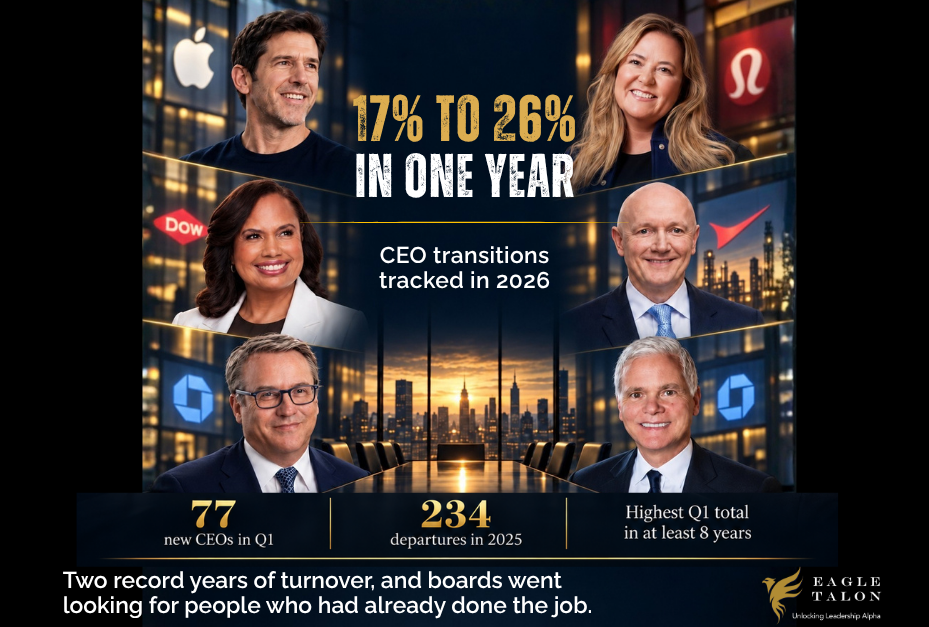
Russell Reynolds counted 77 incoming CEOs globally in the first quarter of 2026. Of those, 26% had already run a public company, up from 17% a year earlier. Average outgoing tenure over the same period rose to 10 years, from 6.6.
Those appointments follow 234 departures in 2025, up 16% year-over-year and 21% above the eight-year average. 2025 was the second consecutive year turnover set a record.
Boards may be holding on to leaders longer and then reaching for someone who has carried the job before. Or a cohort of long-tenured chief executives reached the end at once, and boards de-risked what came next. Either way, boards have less tolerance for an unproven leader.
At Eagle Talon, we have tracked more than 50 large-cap US transitions since January. They already split on board preparation, leader fit, and incentive design.
J.P. Morgan named Doug Petno and Troy Rohrbaugh co-presidents in June and put $30 million of stock behind each. The stock vests after three years only if the bank averages at least 12% return on tangible common equity across 2026, 2027 and 2028. The contest is public and measured against a number.
lululemon named Heidi O'Neill on September 8. Founder Chip Wilson opposed the choice publicly and analysts called her an out-of-left-field pick. The shares fell about 15% over the next five trading days. Several forces moved that stock at once. The selection itself is what the board controlled.
Watch ConocoPhillips. Ryan Lance stayed on as executive chair in a transitional role. So Andy O'Brien took the seat with his predecessor still holding formal governance authority. If that role is still in place a year from now, the board hedged its own pick.
Of Ternus, O'Brien and O'Neill, whose first earnings call tells you the most about the board that chose them?
🔗 Source: Global CEO Turnover Index