Leadership Breakdowns Often Begin With Unmade Decisions
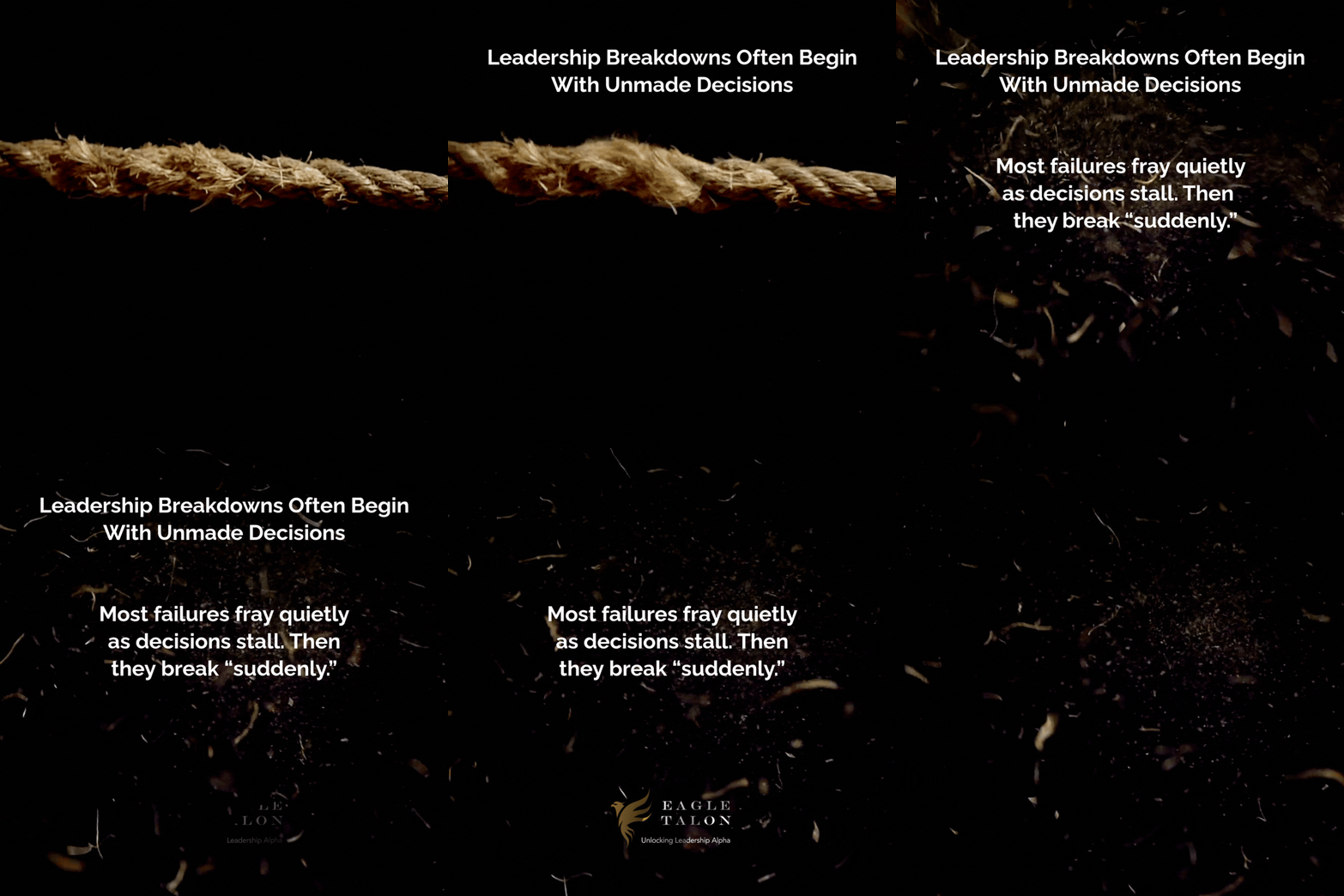
Leadership Breakdowns Often Begin With Unmade Decisions
Most leadership failures don’t show up all at once in the numbers.
They build quietly over time — as decisions get delayed, softened, or avoided.
PwC’s work on board effectiveness highlights a pattern investors often underestimate: boards can stumble for plenty of reasons. One common path isn’t choosing “wrong.” It’s letting direction stay unresolved for too long.
Momentum falters because direction wasn’t set decisively enough.
You can usually see it inside the organization before results finally reflect the strain:
➤ priorities blur
➤ early warning signals get rationalized
➤ accountability shifts from precise to polite
➤ decisions get pushed to next quarter, then the one after that
By the time results finally reflect the strain, the damage is already in the operating system — culture, incentives, and routines. The processes that drive outcomes have already been weakened.
Strong boards treat indecision itself as risk.
They surface tension early. They reset direction before delay turns into habit. And they keep oversight tied tightly to execution.
The idea is simple: leadership is a system, not a personality.
What’s the smallest behavior you watch that tells you the system is starting to slip?