Reed Hastings Executed a Well-Planned Succession When He Left Netflix
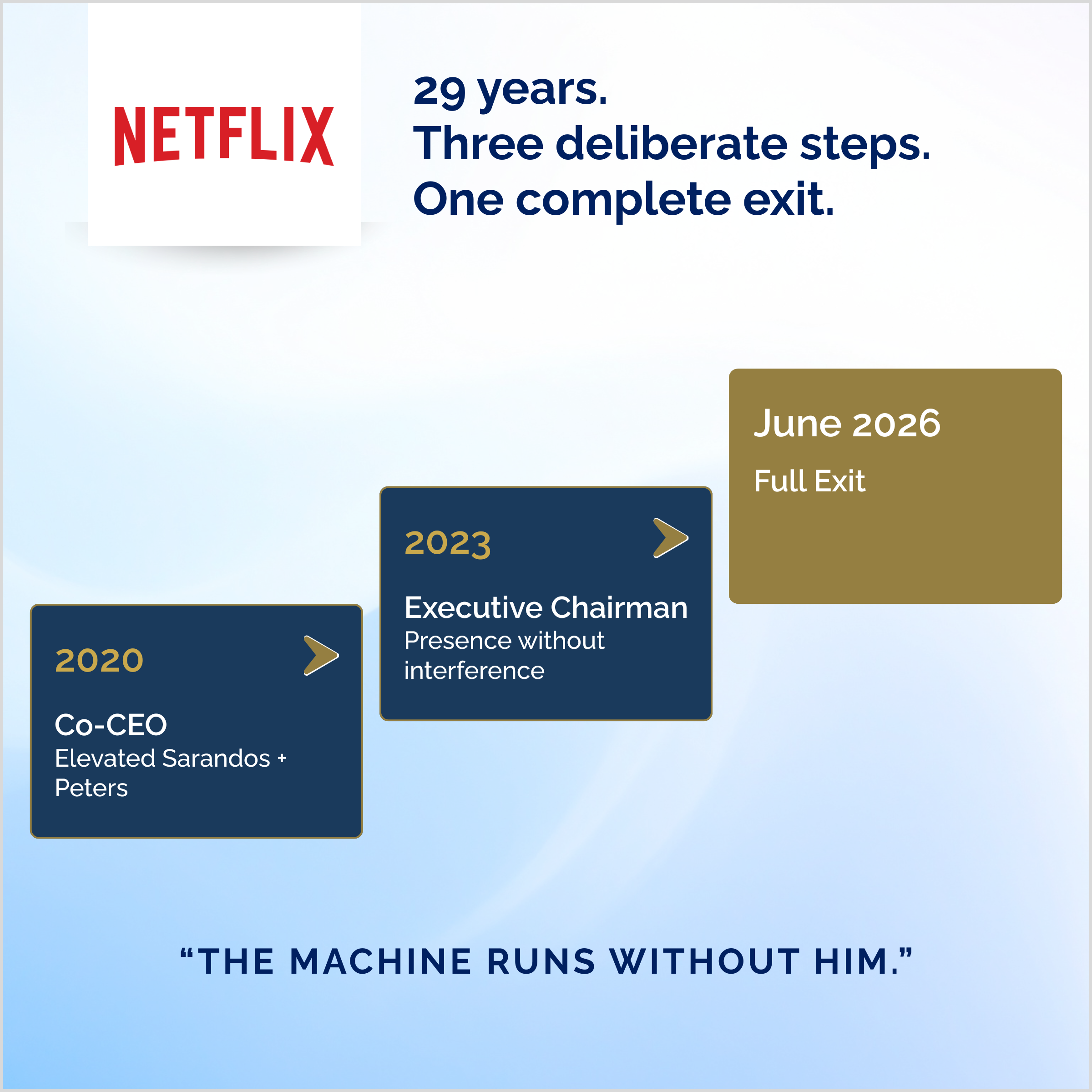
Reed Hastings Executed a Well-Planned Succession When He Left Netflix.
So why did Netflix shares fall 10% on Friday?
The answer comes in two parts.
The first was earnings. Q1 revenue came in at $12.25 billion, up 16% year over year and ahead of expectations. Operating margin reached 32.3%, also ahead of guidance. Net income surged to $5.28 billion, though a $2.8 billion termination fee from the failed Warner Bros. Discovery deal contributed meaningfully to that figure — making the profit beat less clean than it appeared on the surface.
Despite the strong top-line results, Q2 guidance came in slightly below consensus and the company held its full-year outlook without an upward revision. That softer forward picture contributed significantly to the selloff.
The second part was governance.
Hastings executed a three-stage exit, deliberately sequenced over years: stepping down as co-CEO in early 2023 and elevating Ted Sarandos and Greg Peters simultaneously; moving to executive chairman with presence but no operational interference; and exiting the board only after the business demonstrated it could perform without him — ending a 29-year chapter at the company he co-founded.
The market selloff reflected both signals simultaneously — a guidance miss and a founder departure released on the same night. Those are two separate signals, but investors processed them together.
One is a near-term financial signal. The other is more emotional than analytical. Sarandos and Peters have been running Netflix operationally for over two years. The succession has been staged, tested, and deliberate. The concern isn't really whether they can execute — the results already suggest they can.
The concern is whether they carry the same founder premium with investors that Hastings did. That's a softer and harder-to-price question.
Under Sarandos and Peters, the stock climbed from $33 at the time of their elevation in January 2023 to $108 the day before the earnings release — a gain of roughly 226%, or approximately 45% annualized over that period. That trajectory tells you something. Hastings clearly believed the succession was working — and chose this moment to make it permanent.
The next four quarters will either reinforce that confidence or introduce reasons to revisit it.
When a founder exits after a carefully staged multi-year succession — and the stock drops anyway — what does that tell you about how markets actually price leadership?
🔗 Source: Netflix Co-Founder Reed Hastings to Leave Board in June