Risk Is Not Just What Sits on the Balance Sheet
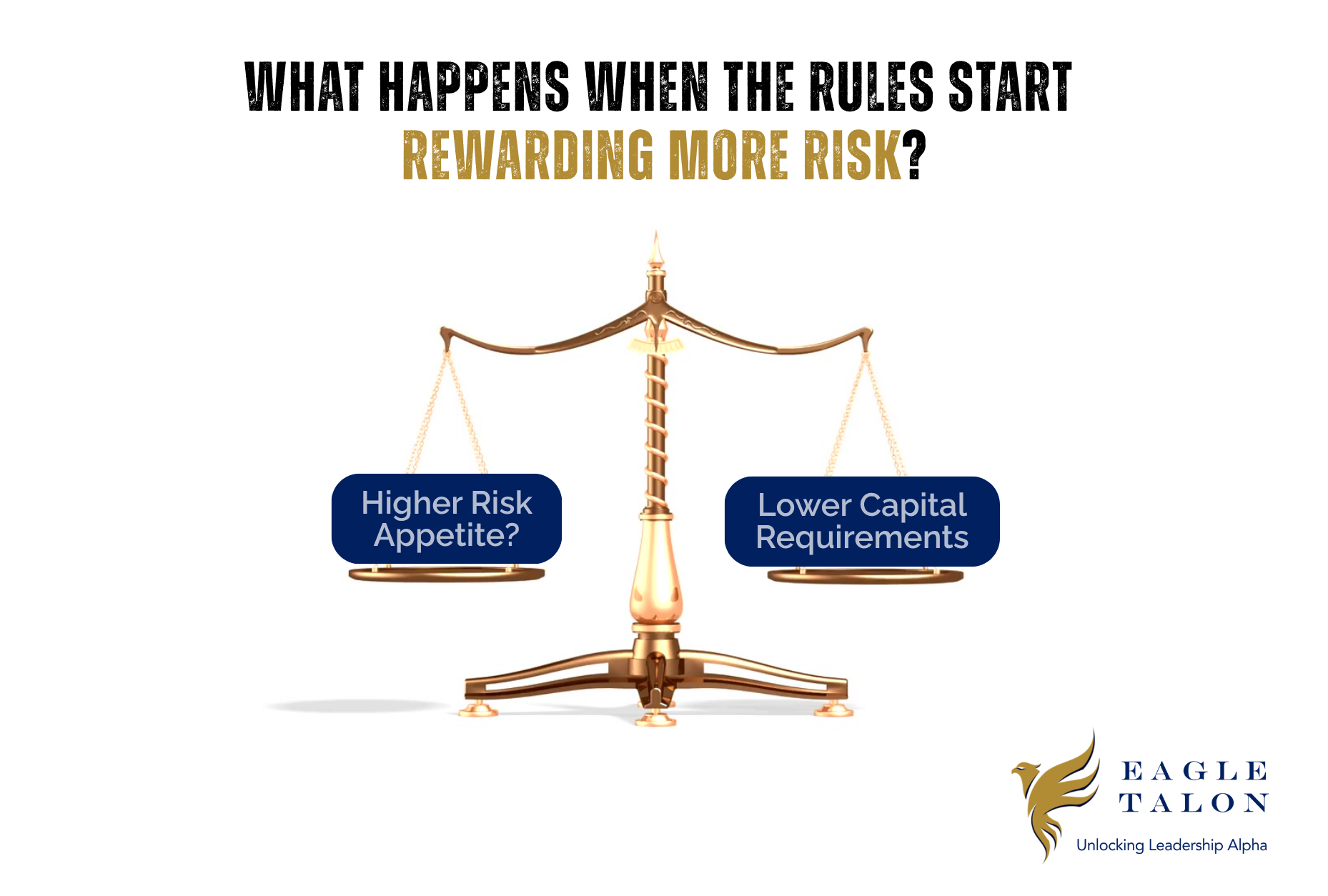
Risk Is Not Just What Sits on the Balance Sheet
In March, U.S. regulators proposed a broad overhaul of bank capital rules — and the numbers are worth understanding precisely.
The revised Basel framework would require the largest banks to hold about 1.4% more in common equity tier 1 capital on a standalone basis. But when combined with companion changes to the G-SIB surcharge and previously announced stress test reforms, the net effect flips: Wall Street banks would be required to hold roughly 4.8% less capital than they do today. That earlier Biden-era proposal would have tightened requirements by up to 20%. This one moves in the opposite direction.
That 4.8% net reduction translates to an estimated $175 billion in capital that the largest banks could redeploy — funds they've been holding in reserve waiting for regulatory clarity.
These are still proposals, subject to a 90-day public comment period before they can be finalized.
That's why this matters beyond banking policy.
When the rules change, behavior changes.
Smart investors don't just watch the risks companies report. They watch the risks that develop from actions the system starts rewarding more generously.
The second-order questions are the ones worth pondering:
➤ Does easier capital treatment expand strategic options, or quietly pressure banks toward more aggressive deployment?
➤ Does it improve flexibility at the same moment some post-crisis safeguards are being loosened?
➤ And who captures the benefit first — borrowers, shareholders, or the institutions themselves?
Supporters say the changes will free up capacity, reduce unnecessary burden, and bring U.S. rules closer to global standards. Critics say the safeguards are being weakened at a time when financial risks are hardly gone.
That tension is the story.
Because portfolio risk often builds quietly under the surface, well before it surfaces in reported results or earnings.
When regulators ease the capital framework, what do you watch first: lending behavior, buyback acceleration, or how management teams start talking about new strategic flexibility?
🔗 Source: How US Regulators Are Overhauling Bank Capital Rules