The Cash Is Growing Faster Than Greg Abel Can Spend It
Note: This image contains AI-generated elements.
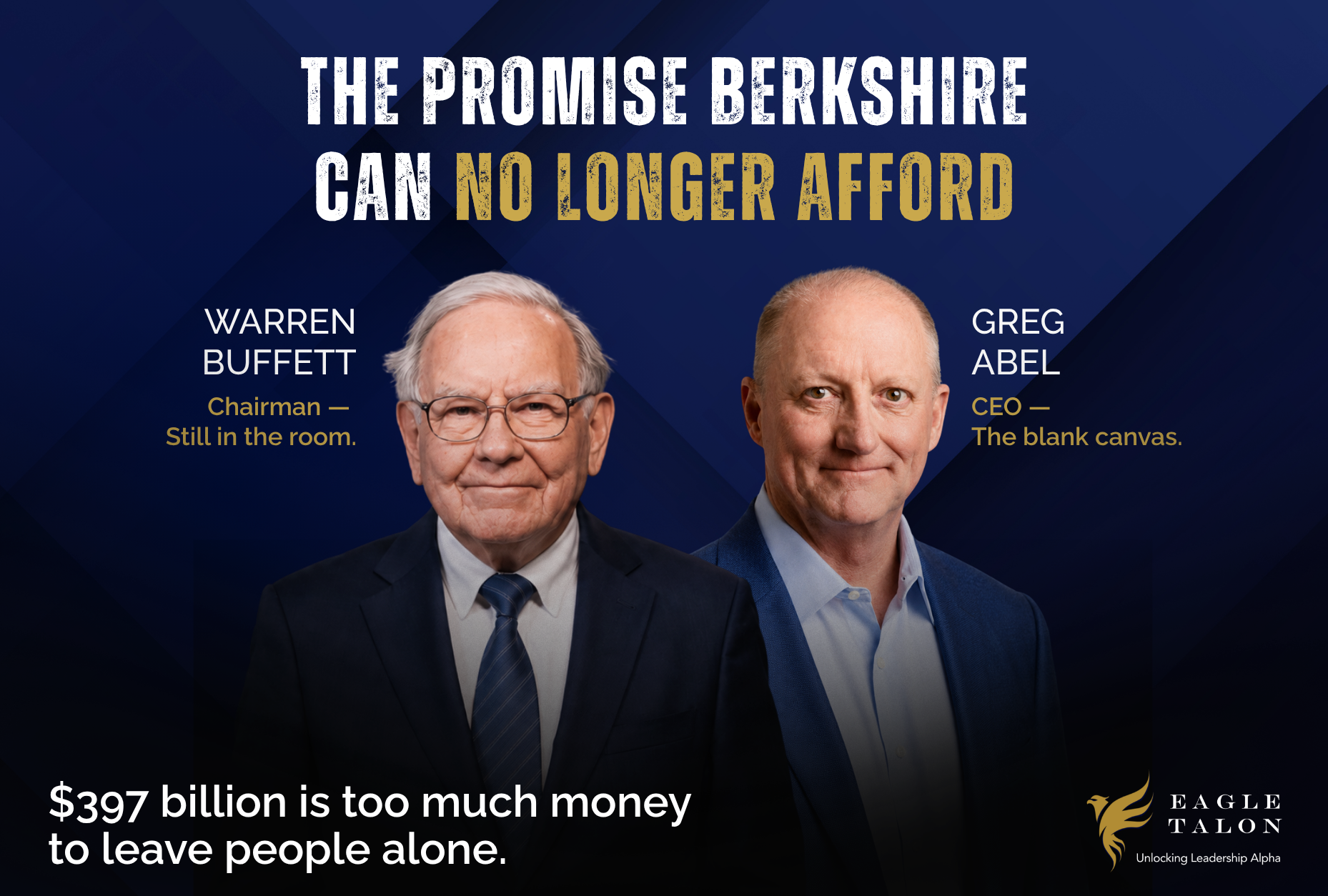
The cash is growing faster than Greg Abel can spend it.
Berkshire's board named him President and CEO effective January 1, 2026. Over his first quarter, the cash pile grew from $373 billion to roughly $397 billion.
Then, in the first week of June, he moved $16.8 billion. Berkshire agreed to acquire homebuilder Taylor Morrison at $72.50 a share in cash. That is roughly $6.8 billion of equity value, about $8.5 billion including debt. It also disclosed an Alphabet Inc. stake of roughly $10 billion.
His biggest week of deals moved less than the pile grew in his first quarter.
Abel has indicated he may consolidate Taylor Morrison with Berkshire's site-built homebuilding inside Clayton Homes Inc.. Buffett rarely integrated. Autonomy was the pitch that won auctions Berkshire didn't win on price: sell to us, keep running it, we won't call.
That pitch doesn't scale to $397 billion. Moving capital at this size means buying bigger, and making bigger acquisitions pay usually means taking out costs. Which means integrating.
So a Clayton integration may not be a preference. The cash balance may be forcing his hand.
At Eagle Talon, we map an incoming CEO's operating record, capital allocation history, and governance position against the first decision the company actually faces. Abel's years running Berkshire Hathaway Energy proved he can run assets. He announced Buffett's last big purchase, the $9.7 billion OxyChem deal, before he originated one of his own. The harder question is what Berkshire offers a founder once "we leave you alone" is off the table.
Buffett, on the week: "Greg did that faster than I could have done it, smoother than I could have done it, and I never talked to the CEO."
That's a Chairman getting ahead of a change to the promise he spent forty years making.
If autonomy stops being the offer, what should Berkshire's pitch to the next founder be?