When a CEO defines an era, the handoff isn’t routine
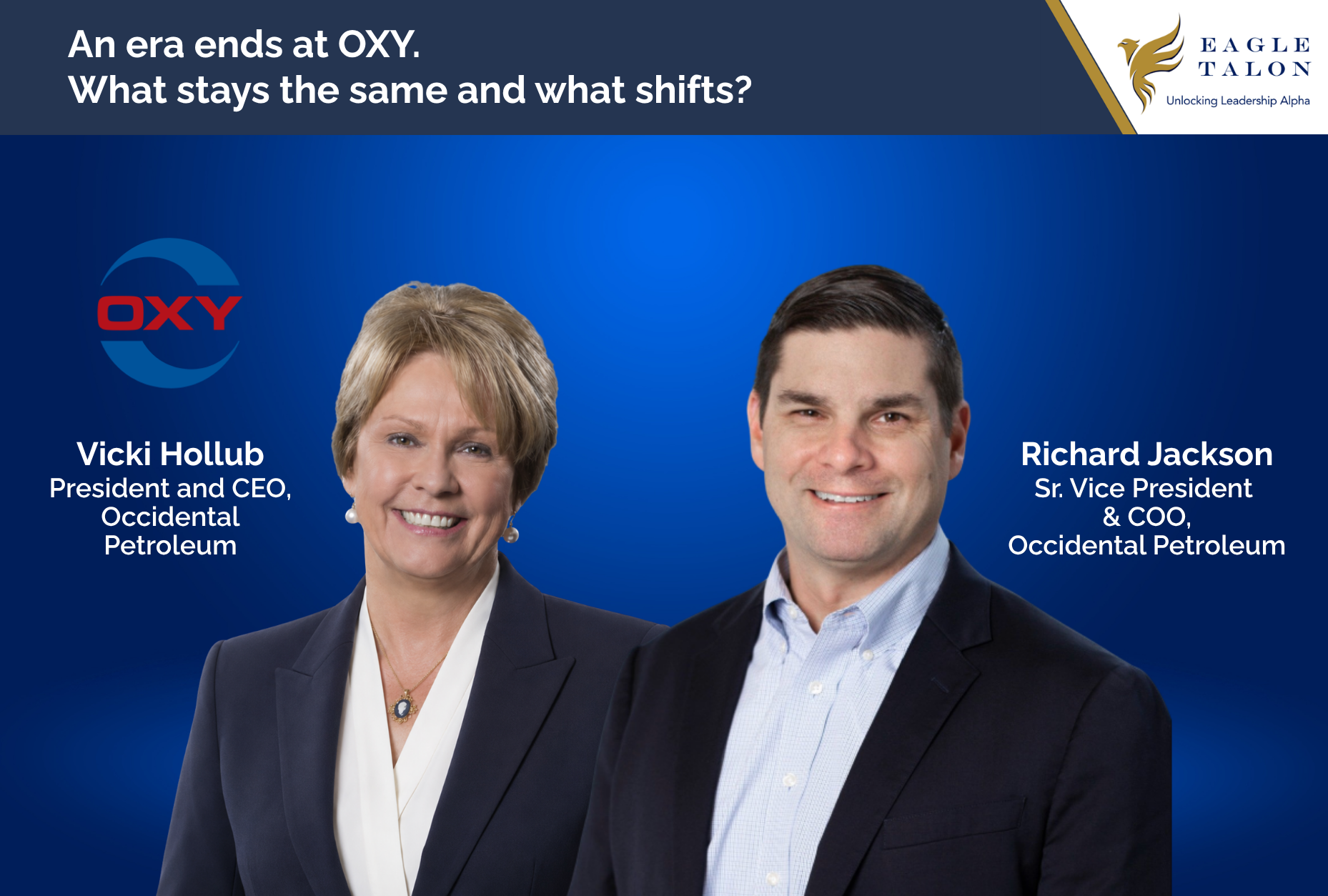
Note: This image contains AI-generated elements.
When a CEO defines an era, the handoff isn’t routine.
Reuters reports Vicki Hollub is preparing to retire as CEO of Occidental later in 2026, and that COO Richard Jackson is expected to succeed her.
This is an internal succession. That tells you the board wants continuity in direction, but it also raises the real question: what additional attributes are they solving for as the next phase of the cycle unfolds?
Hollub didn’t just run OXY. She shaped what the company is and where it’s headed. She pushed through the $55B Anadarko deal, absorbed the backlash, dealt with Carl Icahn’s activism, and kept reshaping the portfolio through CrownRock and the planned chemicals divestiture.
You can debate her strategy and decisions. But you can’t say they didn’t redefine the business and its future.
That’s why Jackson’s first job isn’t to “set a vision.” He’s stepping into a company built on consequential capital allocation calls, and he’ll get judged on what comes next.
A quick mosaic on fit, based on what Reuters laid out:
➤ Insider operator with the institutional memory to run the playbook without a learning curve
➤ Inherits a company where capital discipline and sequencing matter as much as new opportunities
➤ The transition itself is a board statement: the question isn’t “what did we do,” it’s “how do we navigate the next phase from here?”
So the real story isn’t just who fills Vicki Hollub’s seat. It’s what the board wants next:
Continuity? A new tone? A new skill set for a different part of the cycle?
When a CEO leaves after defining an era, what’s the first tell you watch to see what the board is really optimizing for?
🔗 Source: Occidental's Hollub, US Oil's Most Powerful Woman, Prepares to Hand Over Reins, Sources Say