Boards have stopped auditioning CEOs
Boards have stopped auditioning CEOs.
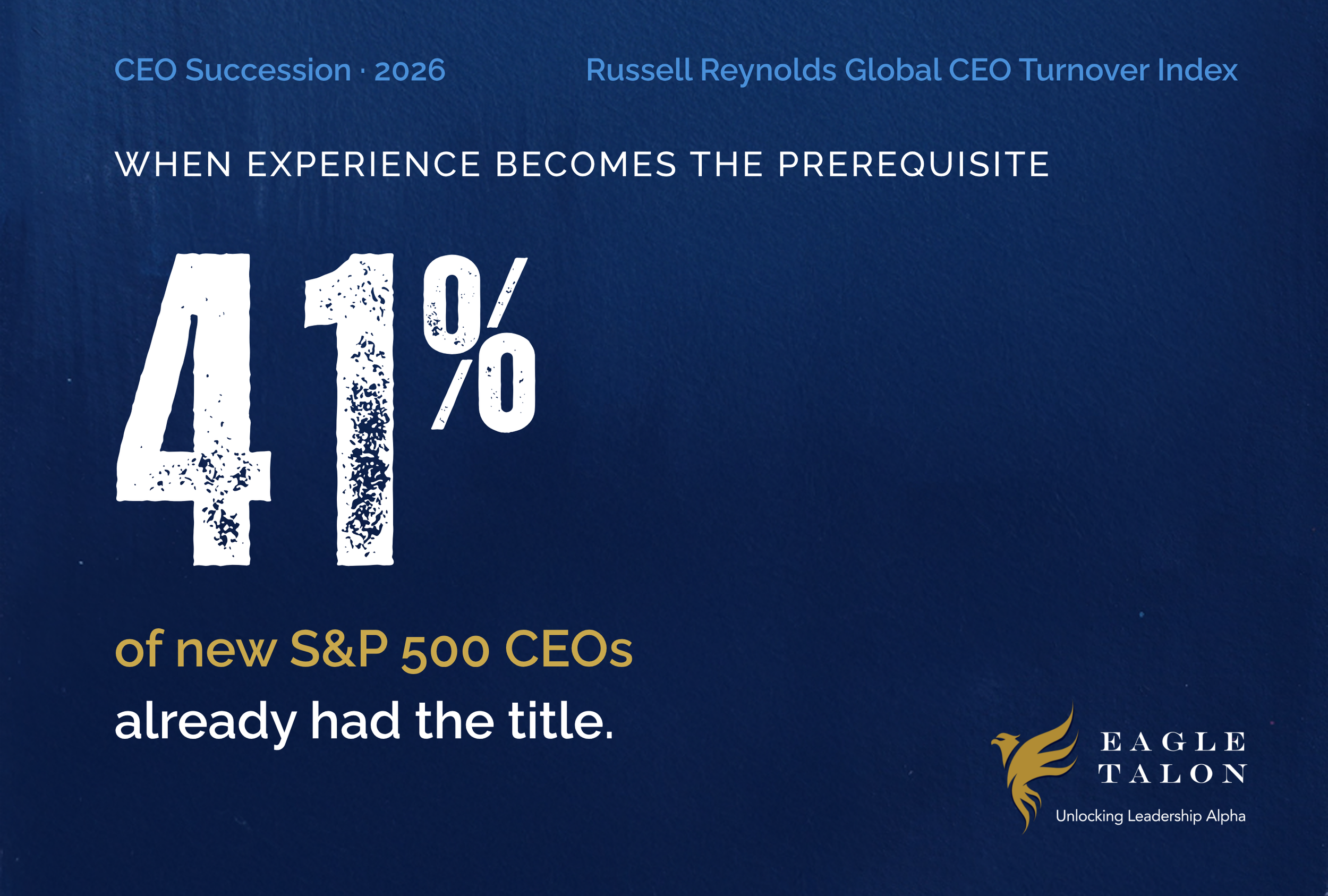
Russell Reynolds' latest Global CEO Turnover Index: 41% of the 22 incoming S&P 500 CEOs in Q1 2026 had already run a public company. A year ago, that figure was 25%. The full-year 2025 data confirms the direction: 68% of global CEO appointments were internal promotions.
When the margin for error shrinks, it seems boards want leaders who can allocate capital without a learning curve.
Apple is the clearest example. John Ternus spent 25 years building the hardware engineering organization. His operational discipline and product execution are proven. The open question is whether he can drive a fundamentally different capital allocation philosophy around AI and services, two areas where Apple's spending needs to accelerate, not just continue. Cook will remain as Executive Chairman, keeping a formal governance seat. The board's bet: Ternus accelerates that transition while Cook ensures continuity doesn't become complacency.
Best Buy chose Jason Bonfig, a 27-year veteran, to reverse declining same-store sales. Dow appointed Karen Carter, a three-decade insider, to execute a $2 billion earnings restructuring.
But insider succession has a specific failure mode. Bob Chapek at Disney spent 26 years in parks and products. When the role demanded a streaming-first capital allocation philosophy he'd never operated in, the mismatch showed within months.
The difference typically surfaces early. If Ternus makes a significant capital allocation decision on AI rather than defending Cook's existing trajectory, that's strong evidence the insider appointment is working as intended.
At Eagle Talon, we map each incoming CEO's operational experience, capital allocation track record, and governance dynamics against the company's most pressing strategic challenge. That match is often underpriced in public markets.
Which appointment this year would you argue fits better than Ternus at Apple?
🔗 Source: Global CEO Turnover Index