BP’S FOURTH CEO IN SIX YEARS. SAME STRATEGY. DIFFERENT OUTCOME?
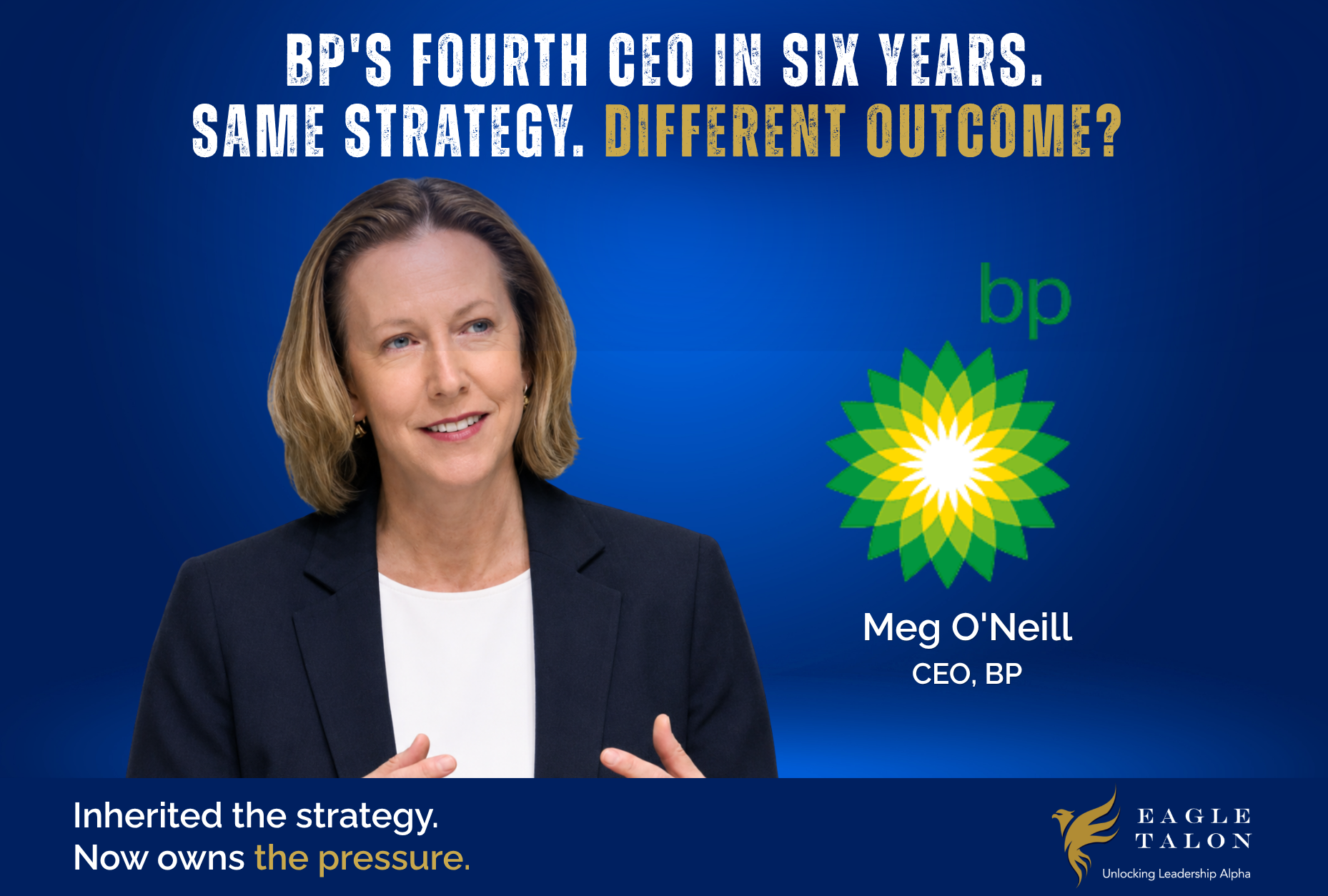
Note: This image contains AI-generated elements.
Investor pressure arrived before Meg O'Neill ran a single earnings call.
On April 1, O'Neill became BP's CEO — the fourth person in that seat in six years. A coalition of 23 institutional investors managing €1.5 trillion has since filed resolutions asking BP to show how its strategy holds up if oil and gas demand falls.
That context matters more than the resolutions themselves.
What's happening at BP inverts the traditional sequence. Performance disappoints. Investors react. Management adjusts.
In O'Neill's case, that order has been reversed. She inherited a strategy her predecessor designed, under activist pressure he was managing, with a shareholder base that has watched four CEO transitions in six years.
BP is betting that oil and gas demand will be resilient long enough to close the valuation gap with U.S. peers. That bet may be right. But defending a capital allocation framework before commodity and demand signals are settled exposes whether a leader has done the strategic groundwork — or is responding to external pressure without a fully tested answer.
At Eagle Talon, this is one of the clearest leadership signals we evaluate. Leaders who perform under compressed timelines share one trait: alignment across the leadership team on the strategy and its tradeoffs was built before the external pressure arrived. The capital spending plan had been pressure-tested. The skeptics had been heard. By the time the investor demands landed, the hard debates were behind them — not ahead of them.
The leaders who fail walk into that pressure with a strategy that has never been challenged by a single skeptical voice inside their own building.
What I'd watch first: whether O'Neill's response sounds like someone who owns the strategy — or someone who inherited it.
When a new CEO faces investor pressure before their first earnings call, what tells you fastest whether they're leading or managing?
🔗 Source: Climate Investors Give BP Until April 1 to Include Resolution or Risk Court Action