Delta’s loyalty program is worth $31 billion. The airline itself trades at $47 billion
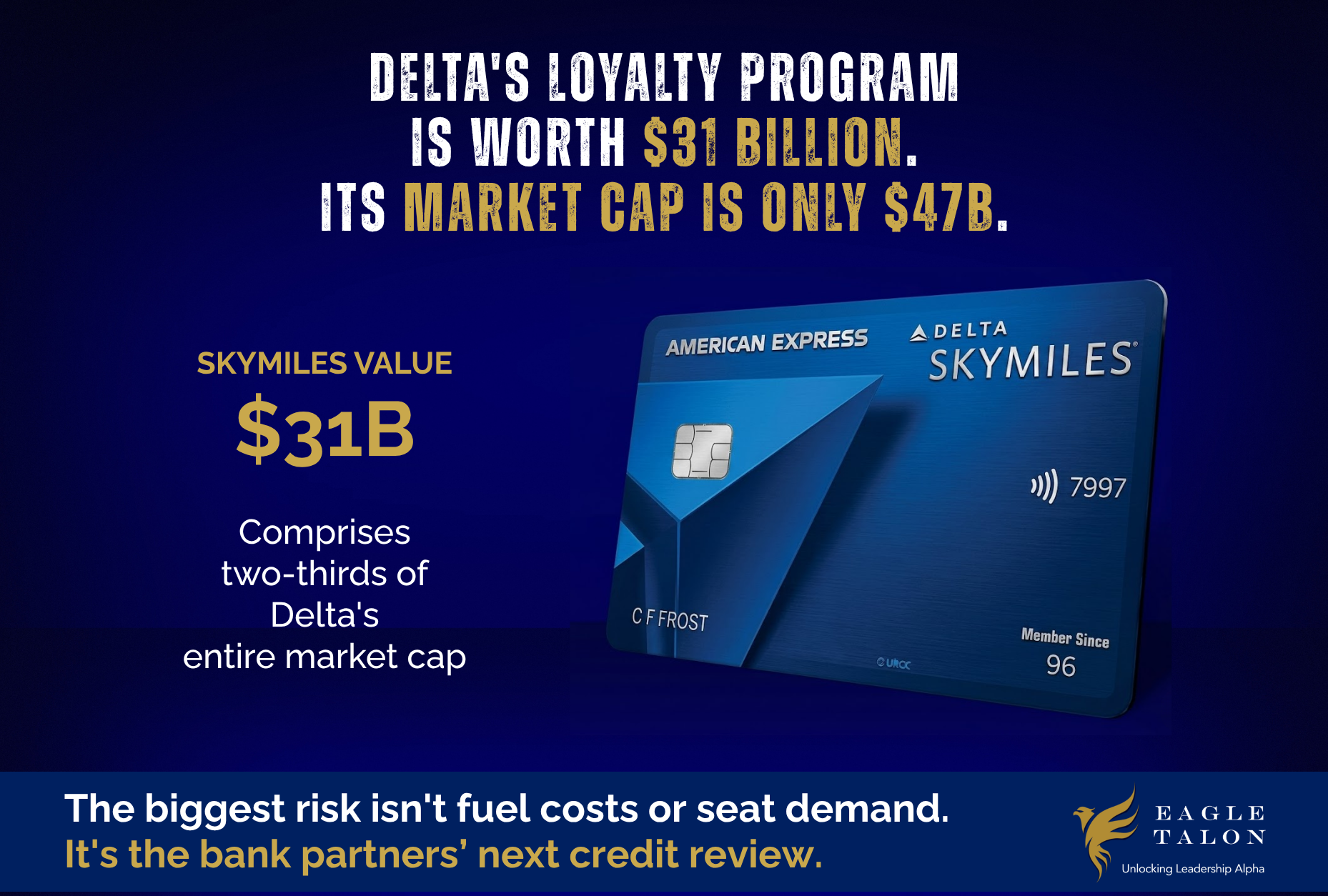
Delta’s loyalty program is worth $31 billion. The airline itself trades at $47 billion.
That ratio tells you where airline value actually lives now — and which leadership decisions created it.
Delta’s American Express partnership generated $8.2 billion in revenue last year, with a contractual target of $10 billion by 2029. United’s loyalty revenue grew 13% in the first quarter of 2026. American locked in a new 10-year exclusive co-branded card deal with Citi in January, and card acquisitions hit record levels.
Banks buy miles in bulk. Cardholders earn them through everyday spending. Airlines collect steady, high-margin revenue before anyone boards a flight.
Ed Bastian has been building this model at Delta for nearly a decade. Based on the latest independent industry valuation, SkyMiles now represents roughly two-thirds of Delta’s entire market capitalization. That reflects a series of deliberate capital allocation decisions: investing in premium cabin experiences, deepening the Amex relationship, and tying elite status to card spending rather than miles flown.
But that concentration carries a risk I think most airline investors underestimate. Loyalty revenue ties airline profitability directly to the bank lending cycle. When banks tighten credit and reduce co-branded card marketing in a downturn, airline earnings typically feel the impact within two to three quarters. The Durbin-Marshall proposal in Congress, which would require more competition in payment-network routing, could pressure the card economics further.
When two-thirds of your implied value depends on a bank partnership, your biggest risk may not be fuel costs or seat demand. It may be your bank partner’s next credit review.
Has Bastian’s decade-long bet on loyalty-driven economics built enough resilience to hold through a credit downturn — or has Delta’s valuation outrun the model behind it?
🔗 Source: Credit-Card Cash Reshapes US Airline Loyalty — and Profit