The S&P 500 crossed 7,000 for the first time on April 15. Most of the companies in the index had very little to do with it
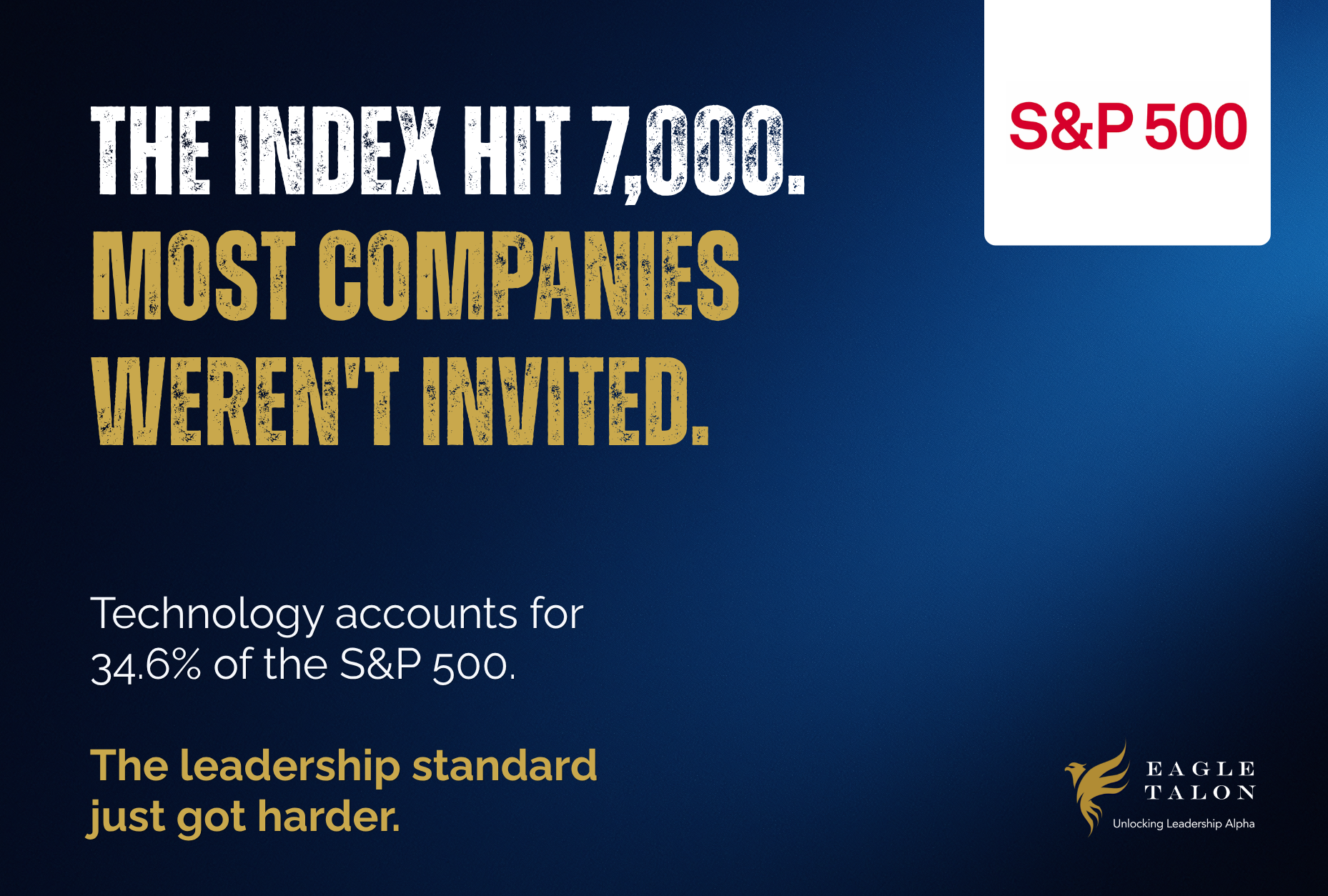
The S&P 500 crossed 7,000 for the first time on April 15. Most of the companies in the index had very little to do with it.
Technology now accounts for 34.6% of the index's total weight. The top 10 holdings represent more than 40% of the entire index. A handful of management teams at NVIDIA, Microsoft, Apple, Meta, and Alphabet Inc. have been making capital allocation decisions that the market is rewarding at historic scale.
That concentration is the story. Not the milestone.
When an index reaches record highs during a quarter where CEOs are flagging tariff uncertainty, withdrawing guidance, and describing a complex set of global risks, the market is making a judgment about which leaders it trusts to execute through the disruption. The answer is a very short list.
For investors, this creates a specific analytical question. When the index is at all-time highs and a portfolio company isn't, that gap is no longer a valuation story. It's a leadership story. Either the management team has a credible plan to close the gap, or they're explaining why the market is wrong.
Q1 2026 earnings are on track to deliver 17% growth. But that aggregate figure masks the concentration underneath it. The technology sector is projected to deliver earnings growth above 25%. The rest of the index is growing at a fraction of that rate.
At Eagle Talon, we read index milestones as a reset of the leadership standard. The companies at record highs earned it through disciplined capital allocation, operational execution, and the willingness to commit heavily to AI infrastructure before the returns were fully proven.
The question for every other board and CEO becomes harder at 7,000: what is your version of that bet? And have you made it?
Which companies in your portfolio have a credible answer?
🔗 Source: S&P 500 Posts New Record Close, Nasdaq Notches Longest Win Streak Since 2009: Live Updates