When a CFO Becomes CEO, the Board is usually sending a signal
Note: This image contains AI-generated elements.
When a CFO Becomes CEO, the Board is usually sending a signal.
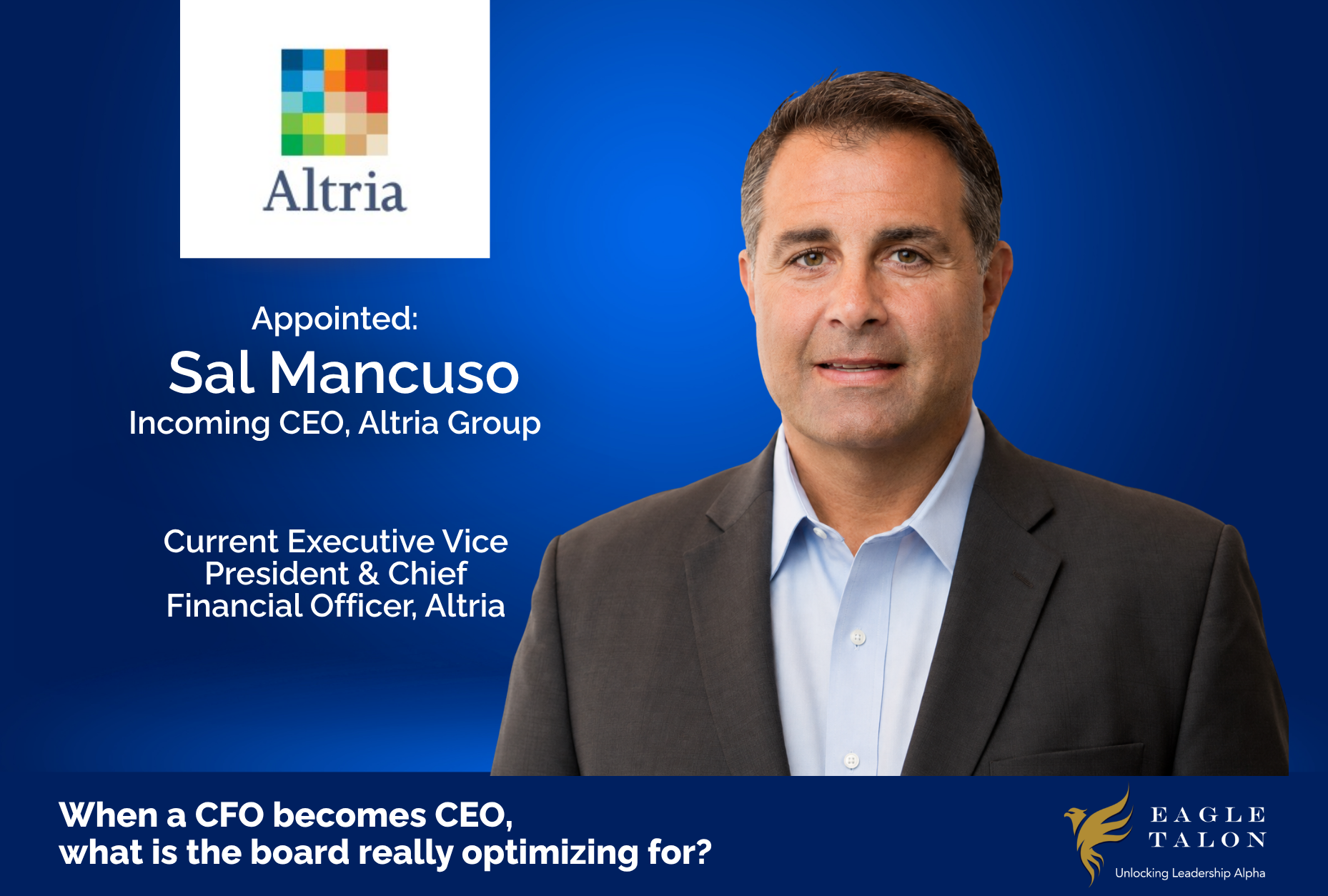
In December, Altria named Sal Mancuso to succeed Billy Gifford as CEO. Gifford will retire in May 2026 after leading the company since 2020, and will stay on as a consultant through at least year-end.
The board considered both internal and external candidates before landing on Mancuso.
That detail matters.
When a board still looks outside, then chooses the CFO anyway, this is not a default succession. It is a deliberate statement about what the next phase of the business requires.
In a company like Altria, that usually points toward:
➤ Tighter capital discipline
➤ Steadier operating control
➤ Less tolerance for unfocused expansion
The consultant arrangement is worth watching, though context helps here. Altria separates its chair and CEO roles — board chair Kathryn McQuade remains in place — so Gifford's advisory role is a transition tool, not a power structure. That actually gives Mancuso more room to set his own direction than the headline might suggest.
CFO-to-CEO transitions are often underread. They tend to signal that the board wants the next leader measured less on vision-setting and more on execution, cost structure, and judgment.
When a board elevates the CFO after a genuine outside search, what's your first read — continuity, caution, or conviction in financial discipline?
🔗 Source: Altria CEO Billy Gifford to Retire in May, CFO Mancuso to Succeed